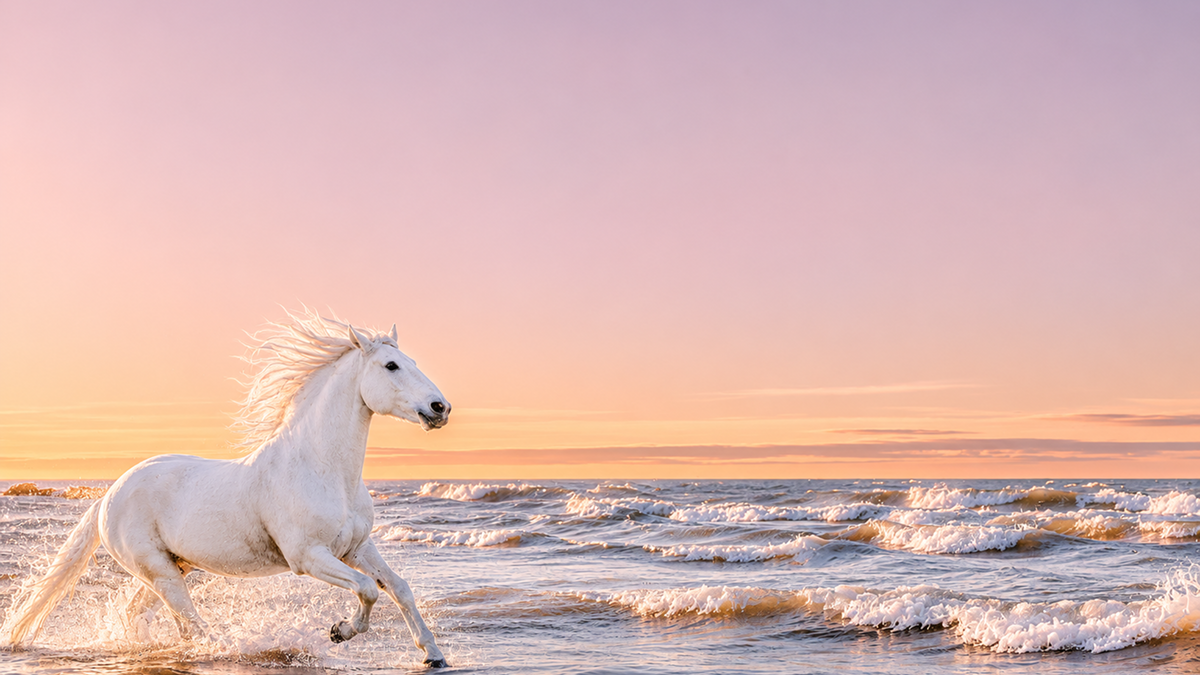
Off the coast of Maryland and Virginia, a thin strip of sand holds one of America's most beloved sights. The Assateague Island wild horses graze beside the surf, wade through salt marsh, and answer to no one.
Their story mixes legend, history, and survival. It's also why they've become such a powerful subject for fine art photography.
Shipwreck Legend or Settlers' Secret?
Local folklore says the horses swam ashore from a shipwreck off the Virginia coast. It's a dramatic tale, but no records have ever confirmed it.
The more likely story is less romantic but just as interesting. In the late 1600s, owners brought horses to barrier islands like Assateague to avoid fencing laws and livestock taxes.
That makes the horses feral rather than truly wild. They descend from domestic animals that slowly returned to a wild life. It's a quiet reminder of how closely people and horses have always been linked.
Two States, Two Herds
A fence at the state line splits the Assateague Island horses into two main herds. The National Park Service manages the wild horses in Maryland. The Chincoteague Volunteer Fire Company owns the Virginia herd.
The Virginia horses are the ones most people call Chincoteague ponies. Each July, they swim across a narrow channel to Chincoteague Island during the famous Pony Penning festival.
Many visitors first meet them in the pages of Misty of Chincoteague. On both sides, Assateague ponies live in small bands of two to twelve horses. Each band keeps to its own home range.
Life on a Barrier Island
Life isn't easy for the Assateague Island wild horses. They face scorching summers, stormy weather, swarms of mosquitoes, and food that offers little nutrition.
They graze on marsh and dune grasses and often head for the surf to escape biting insects. That's why wild horses on the beach are such a familiar sight here.
Some visitors simply call it horse island. Like the rolling hills of Val d'Orcia in Tuscany, it's a landscape that shapes every photograph taken there.
Why Wild Horses Make Such Powerful Fine Art
Horses have stood beside people for thousands of years. Seeing them run free stirs something deep, a mix of admiration and longing.
The Assateague Island wild horses carry that feeling in every frame. Their manes tangle in the wind, their hooves churn the surf, and nothing about them is posed.
It's a big part of why equine photography is collectible. A great image captures not just a horse, but the freedom it stands for.
Freezing a Gallop in Time
For centuries, people couldn't agree on how a running horse actually moves. Photography finally settled the question.
In 1878, Muybridge's galloping horse sequence proved that all four hooves leave the ground mid-stride. It was one of the first times a camera revealed something the human eye couldn't see.
Capturing that energy on a beach still takes patience and quick timing. The best moments last a fraction of a second, so reading the herd's rhythms matters.
Photographing the Herd With Respect
These horses may look calm, but they're wild animals. Every year, visitors who get too close are kicked, bitten, or knocked down.
Feeding them causes harm too. Horses that start begging near roads are often hit by cars.
Responsible photographers follow ethical field practices, using long lenses and giving animals plenty of space. That restraint shows in the final image, which feels honest rather than staged.
Bringing That Untamed Spirit Home
Equus Libre follows wild horses across several herds and landscapes, including the shores of Assateague. Each image celebrates the same untamed spirit that makes these animals so compelling.
Choosing a piece is personal, so trust the image that makes you pause. If one speaks to you, it's easy to ask about edition availability and sizing.
Where the Wild Still Runs
The Assateague Island wild horses remind us that some things are better left untamed. Their freedom is the whole point.
To bring a piece of that spirit home, browse these wild horse photography prints. You'll also find coastlines, seabirds, and snowfields in Lukas Griffin's work.
Frequently Asked Questions
Are the Assateague horses truly wild?
Technically, they're feral. They descend from domestic horses that returned to a wild life centuries ago. Today they live much like any wild animal.
How did horses end up on Assateague Island?
Legend points to a shipwreck, but there's no record of one. The likeliest answer is that 17th-century owners brought horses there to avoid fencing laws and livestock taxes.
What's the difference between Assateague and Chincoteague ponies?
They share one island but live in separate herds. Maryland wild horses are managed by the National Park Service. The Virginia herd, often called Chincoteague ponies, belongs to a local fire company.
Can you see the wild horses year-round?
Yes. The horses live on the island in every season. Summer insects often push them onto the beach, where they're easiest to spot.
Is it safe to get close to the horses?
No. They're wild and can kick or bite, and feeding them is harmful. Enjoy them from a distance, ideally with a long lens.
Why do wild horse photographs make meaningful art?
They capture freedom in its purest form. Photographs of the Assateague Island wild horses bring that untamed spirit into everyday rooms.