How to Choose the Right Fine Art Print Size for Your Wall

Most people underestimate fine art print size. They choose something they love, hang it on the wall, and feel that something's off without knowing why. More often than not, the issue isn't the image. It's the scale.
Choosing the right fine art print size is about proportion, visual weight, and how a piece interacts with everything around it. Lukas Griffin's fine art photography is designed to fill spaces with genuine presence, and that impact starts with choosing the right dimensions from the beginning.
Start With the 60–75% Rule
The most reliable starting point for fine art print size is the 60–75% rule. Your artwork should cover roughly 60 to 75 percent of the width of the wall or the furniture it sits above.
For a sofa that's 84 inches wide, that means a print or grouping somewhere between 50 and 63 inches wide. This range gives the artwork visual authority without overwhelming the space. It also creates the proportional balance that makes a room feel intentional rather than assembled by chance.

Sizing Art Above Furniture
Hanging fine art above a sofa, bed, or console table follows a specific set of rules. The bottom of the frame should sit 6 to 8 inches above the furniture. This keeps the art visually connected to the piece below it rather than floating disconnected on the wall.
Width matters just as much as height here. A single large-format print above a sofa reads as a statement. A grouping of smaller prints can achieve the same visual width while adding compositional variety. Either approach works when the total width stays within the 60 to 75 percent range.
Sizing Fine Art for Empty Walls
Empty walls without furniture below them give you more flexibility, but they also demand more intentional thinking about fine art print size. A print that's too small on a large empty wall looks lost. One that's too large can make the room feel compressed.
Start by measuring the wall's full width and height. For walls with standard 8-foot ceilings, a print between 24 and 40 inches in its largest dimension typically works well. For rooms with higher ceilings, scale up significantly. Oversized photography prints, anything above 40 inches, create an immersive quality on tall walls that smaller prints simply can't achieve.
Why Viewing Distance and Hanging Height Matter
The distance between the viewer and the artwork directly affects which fine art print size works best for a given room. In a large living room where the primary viewing distance is 10 to 12 feet, a small print loses all impact. The image needs enough scale to be read clearly and felt emotionally from across the space.
Hanging height matters just as much. Following museum hanging standards, the center of the artwork should sit 57 to 60 inches from the floor. This aligns with the average human eye level and is the standard used in galleries worldwide. Above furniture, prioritize the 6 to 8 inch gap rule over the 57-inch standard.
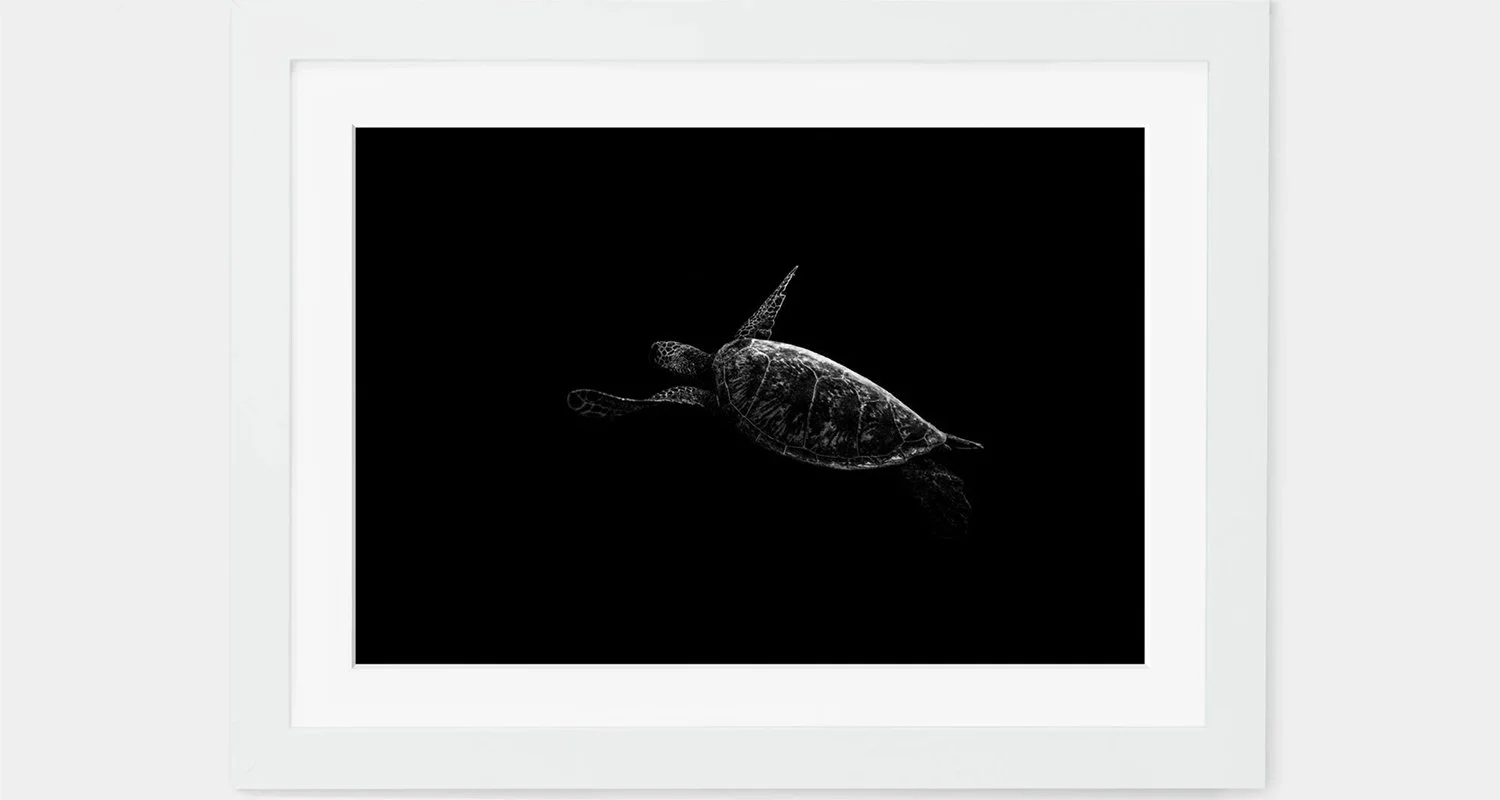
Gallery Walls vs Single Statement Pieces
Gallery walls and single statement prints solve the same problem through opposite strategies. A gallery wall fills a larger expanse using multiple smaller pieces grouped together. A single statement print does it through scale alone.
Knowing which approach suits your space is straightforward. If you want simplicity, emotional focus, and maximum visual impact from one image, a single large-format print is almost always the stronger choice. Following professional gallery hanging rules, gallery wall frames should be spaced 2 to 3 inches apart to read as a cohesive grouping rather than a scattered collection.
Choosing the Right Aspect Ratio
Aspect ratio shapes how a print interacts with its wall. Landscape orientation, wider than it is tall, suits horizontal wall spaces and furniture like sofas and consoles naturally. Portrait orientation, taller than it is wide, works well in narrow spaces, hallways, and flanking arrangements on either side of a focal point.
Square prints are the most versatile and suit both symmetrical and asymmetrical arrangements. Panoramic fine art photography, with its dramatically wide horizontal format, works particularly well on wide feature walls in living rooms and commercial interiors where scale and sweep are the primary design goal.
Framing and Final Footprint
A frame adds significantly to the final footprint of a print. A float frame on a 24x36 inch print can add 3 to 4 inches on each side, turning it into a piece closer to 30x42 inches on the wall. Always factor frame dimensions into your sizing calculations before committing to a wall.
Matting adds further size. Understanding the full range of fine art print materials and presentation options helps you account for these additions and avoid the common mistake of choosing a print size without considering its final framed footprint.
Fine Art Photography for Commercial Spaces
Commercial spaces follow different sizing logic than residential interiors. Lobbies, hotel corridors, office reception areas, and restaurant dining rooms require artwork that reads clearly at a distance and holds visual authority in a high-traffic environment.
Large-scale fine art photography prints, typically 40 inches and above in the largest dimension, are the standard choice for commercial installations. They create immediate impact, define the atmosphere of a space, and signal quality to every person who enters. Proper display and archival considerations matter more in commercial settings where prints are exposed to higher foot traffic, variable lighting, and longer display periods.
Choosing With Confidence
Fine art print size is never arbitrary. Every decision about scale, proportion, and placement shapes how the work feels in a room and how long it holds your attention. The right size doesn't just fit a wall. It makes the room feel complete.
Browse available fine art photography collections to see how different formats and subjects work across a range of spaces, or get in touch if you'd like guidance choosing the right scale for your wall.
Frequently Asked Questions
What size fine art print should I hang above a sofa?
The print or grouping should cover 60 to 75 percent of the sofa's width, with the bottom of the frame sitting 6 to 8 inches above the furniture. For an 84-inch sofa, aim for a total artwork width of roughly 50 to 63 inches.
What is the 60–75% rule for wall art?
The 60 to 75 percent rule states that your artwork should occupy 60 to 75 percent of the wall or furniture width it relates to. It creates visual proportion and prevents prints from looking too small or too dominant in their surroundings.
How high should fine art photography be hung?
The center of the artwork should sit 57 to 60 inches from the floor, which aligns with the average human eye level. Above furniture, prioritize placing the bottom of the frame 6 to 8 inches above the piece rather than strictly following the 57-inch standard.
Should wall art be centered on the wall or the furniture?
Above furniture, center the artwork on the furniture below rather than the full wall. This creates visual connection between the art and the piece it sits above. On empty walls without furniture, centering on the wall itself creates the most balanced result.
What size print works best for large empty walls?
For walls with standard 8-foot ceilings, prints between 24 and 40 inches in the largest dimension work well. For rooms with higher ceilings, scale up significantly. Oversized photography prints above 40 inches create an immersive quality on tall or wide empty walls.
Are oversized fine art prints better for modern interiors?
In most cases, yes. Modern interiors favor bold, simplified visual choices, and a single large-format print typically delivers more impact than a grouping of smaller pieces. Oversized prints also create a sense of luxury and intentionality that suits contemporary design aesthetics.
How much space should be between gallery wall frames?
Two to three inches between frame edges is the professional standard for gallery walls. This spacing keeps the grouping cohesive without the pieces feeling crowded. Spacing beyond three inches risks making the grouping look scattered rather than intentional.
Does the frame size count when measuring wall art?
Yes, always factor in the frame when calculating the final footprint of a print. A float frame can add 3 to 4 inches on each side, and matting adds further dimension. Calculate your total framed size before measuring against your wall to avoid sizing errors.
What aspect ratio works best for panoramic photography?
Panoramic prints suit wide feature walls in living rooms and commercial interiors where horizontal sweep and scale are the primary design goal. They work particularly well above long furniture like sofas and consoles and in spaces with high ceilings where vertical height is less of a constraint.
How do I choose fine art photography for commercial spaces?
Prioritize scale. Prints of 40 inches and above in the largest dimension work best in lobbies, offices, hotels, and restaurants where artwork needs to read clearly from a distance. Choose subjects and tones that align with the atmosphere you want the space to communicate.