7 Most Essential Fine Art Photography Composition Techniques

Composition separates snapshots from fine art. While anyone can point a camera and press a button, professional photographers use deliberate photography composition techniques to create images that command attention and justify their place on gallery walls.
Whether you're selecting prints for your home or building a collection, recognizing strong composition helps you identify exceptional work. Here are the seven most essential composition techniques in photography that elevate images from documentation to art.
1. Rule of Thirds: The Foundation of Balanced Images

The rule of thirds divides your frame into nine equal sections using two horizontal and two vertical lines. Placing key elements along these lines or at their intersections creates natural balance and visual interest.
In ocean photography, positioning the horizon along the top or bottom third creates more dynamic images than centering it. For wildlife work, placing an animal's eye at an intersection point gives the subject presence while allowing the environment to provide context.
The rule of thirds is foundational because it's intuitive yet powerful. Even viewers unfamiliar with photographic principles respond to the balance it creates.
2. Leading Lines: Guiding the Viewer's Eye
Leading lines are visual pathways that draw attention through an image toward the main subject. These can be literal, like roads and fences, or implied, like the curve of a coastline or directional flow of clouds.
Diagonal lines add energy and dynamism. The receding perspective of a pier extending into the ocean pulls viewers into the scene and creates spatial depth. Curved lines offer a more graceful journey through the frame. Converging lines create dramatic perspective and emphasize scale.
Professional photographers deliberately position themselves to maximize leading lines. A slight shift in camera position can transform a chaotic scene into one with clear visual flow.
3. Framing: Creating Depth and Focus
Natural framing uses elements within a scene to create a "frame within a frame" around your subject. Archways, overhanging branches, windows, and rock formations all serve this purpose.
Framing adds context by showing the environment surrounding your subject. It creates a sense of three-dimensionality by establishing foreground, middle ground, and background. Most importantly, it guides the viewer's eye to the focal point without ambiguity.
In coastal photography, a natural rock arch framing a sunset creates more visual interest than the sunset alone. The key is using frames that enhance rather than distract from your main subject.
4. Negative Space: The Power of Minimalism

Negative space refers to the empty areas surrounding your subject. These areas give your subject room to breathe and create a sense of scale and isolation.
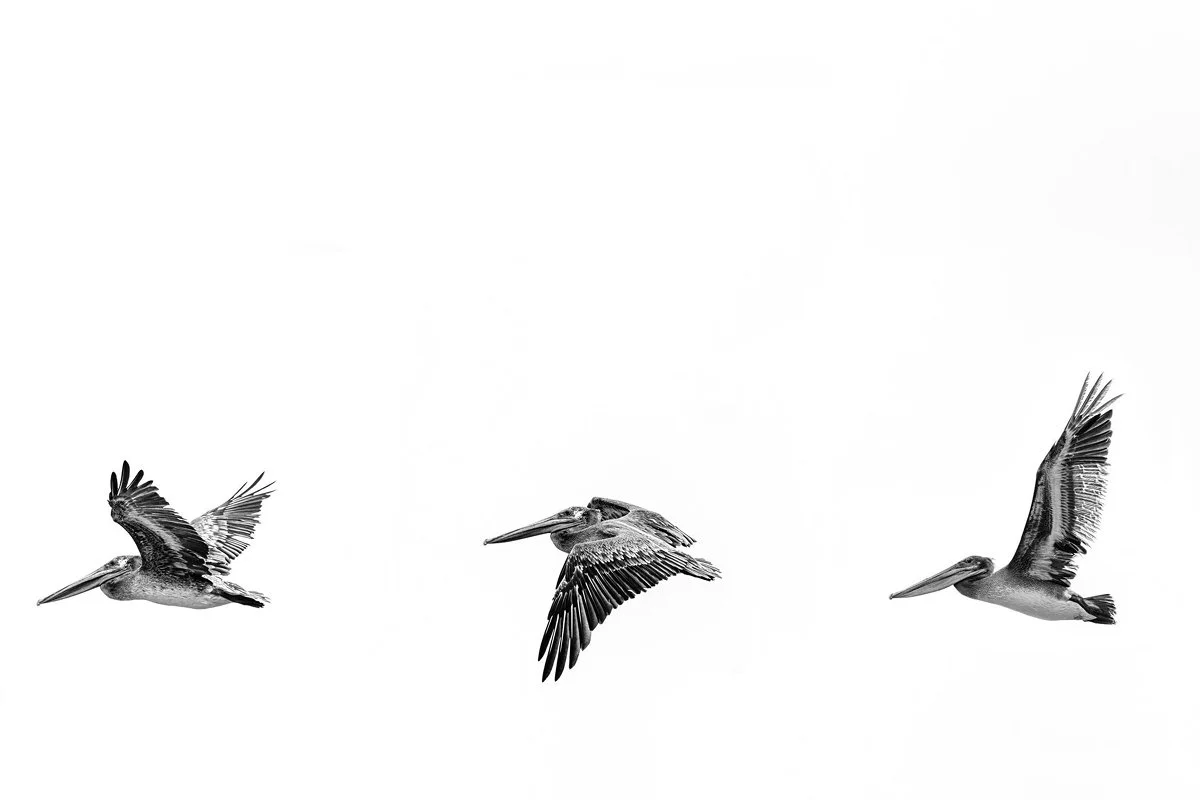
This photo composition technique works particularly well for fine art prints because it offers sophisticated visual restraint. A single pelican against an expanse of sky or a lone tree in a snowy field use negative space to create emotional resonance.
Negative space also makes images more versatile for interior design. The uncluttered areas allow the photograph to complement rather than compete with its surroundings.
5. Symmetry and Patterns: Visual Harmony
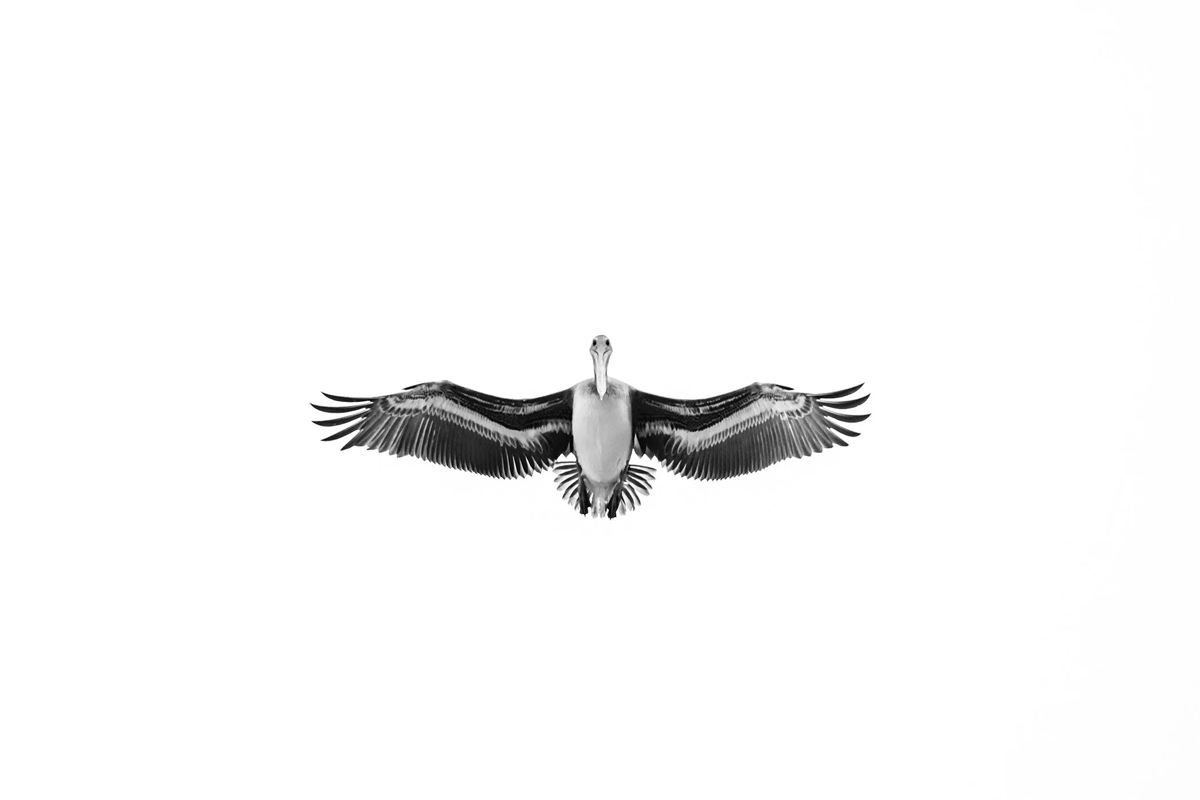
The human brain finds satisfaction in symmetry and repetition. Perfect mirror reflections, repeating architectural elements, or rhythmic patterns in nature all create visual harmony.
Symmetry can be literal, like a perfectly still lake reflecting mountains, or architectural, like repetitive columns. Patterns work similarly, whether it's repeating waves of sand dunes or geometric tiles of a Mediterranean courtyard.
Breaking symmetry or patterns can be equally powerful. A single red door in a row of blue ones creates visual tension that commands attention.
6. Foreground Interest: Adding Dimension

Including compelling foreground elements transforms flat images into three-dimensional experiences. Rocks, flowers, driftwood, or architectural details in the immediate foreground create layers that give viewers a sense of depth.
Foreground interest works by creating visual stepping stones that lead into your image. Rather than presenting a single flat plane, you're offering multiple points of interest at varying distances.
The difference between amateur and professional landscape work often comes down to foreground treatment. Professionals deliberately search for foreground elements that complement the main subject.
7. Golden Ratio: Nature's Composition

The golden ratio (approximately 1.618 to 1) appears throughout nature in spirals, proportions, and growth patterns. This mathematical relationship creates compositions that feel naturally harmonious.
Professional photographers use the golden ratio to position key elements along the spiral's curve or at its focal point. An ocean wave curling perfectly into the spiral creates compositions that feel instinctively right.
The golden ratio differs from the rule of thirds in its asymmetry and natural flow. Both are valuable tools, with the golden ratio offering more organic, flowing compositions.
Combining Techniques for Maximum Impact

Exceptional fine art photography rarely relies on a single compositional approach. Professional photographers layer multiple techniques to create rich, complex images. An ocean scene might use the rule of thirds for horizon placement, leading lines from a pier, natural framing through rocks, and negative space in the sky.
For collectors, recognizing these layered approaches helps identify truly masterful work. A photograph that successfully combines three or four image composition techniques demonstrates both technical skill and artistic vision.
Final Thoughts
Photography composition techniques form the foundation of fine art photography. They transform scenes into deliberate visual statements, separating professional work from casual snapshots.
These seven techniques represent the essential toolkit professional photographers use to create gallery-worthy work. At Lukas Griffin Photography, every image reflects this compositional intentionality, creating prints worthy of the spaces they inhabit.